Choosing Between Whole-House Filtration, Reverse Osmosis, and Water Softeners
Water treatment can get confusing surprisingly fast.
One person tells you that a whole-house filter is essential. Someone else swears by reverse osmosis. Then a neighbor says a water softener completely changed the way their home feels. After ten minutes of online research, you may have fifteen browser tabs open and even less clarity than when you started.
The truth is, these systems are not really competing with one another in every situation. They are often designed to solve different problems.
A family dealing with mineral buildup around faucets may need something very different from a homeowner who simply wants better-tasting drinking water. Another household might have concerns that affect nearly every faucet, shower, and appliance in the home.
Related reading A Better Glass of Water Starts With the Right Filtration System
That’s why the smartest starting point is not asking, “Which system is best?”
A better question is, “What exactly do I want my water treatment system to improve?”
Once you understand that, the choices begin to make much more sense.
Start With the Water You Already Have
Before buying any water treatment equipment, it helps to understand what is actually happening with your water.
Are you noticing white or chalky buildup around faucets? Does your water have an unpleasant taste or smell? Are there visible particles? Do your dishes come out cloudy? Is the concern limited to drinking water, or does it affect showers, laundry, and appliances too?
These details matter because different treatment methods are designed for different purposes.
Related reading Understanding Reverse Osmosis and Whole-Home Water Treatment for Everyday Living
A water test or professional evaluation can provide useful information and help avoid the common mistake of buying equipment based purely on advertising. A system that works beautifully for your neighbor may not be the right fit for your home.
Water conditions, household size, plumbing, daily usage, and personal preferences can all influence the best solution.
Sometimes the answer is surprisingly simple. Other times, combining different treatment methods makes more sense.
Related reading Why a Water Softener Can Be One of the Smartest Upgrades for Your Home
When the Entire Home Needs Attention
Some water concerns follow you everywhere.
You see the effects in the shower, on bathroom fixtures, in the laundry room, and around kitchen faucets. Maybe sediment is affecting multiple areas of the plumbing, or you simply want treated water available throughout the house.
In these situations, Whole house filtration systems can be worth considering.
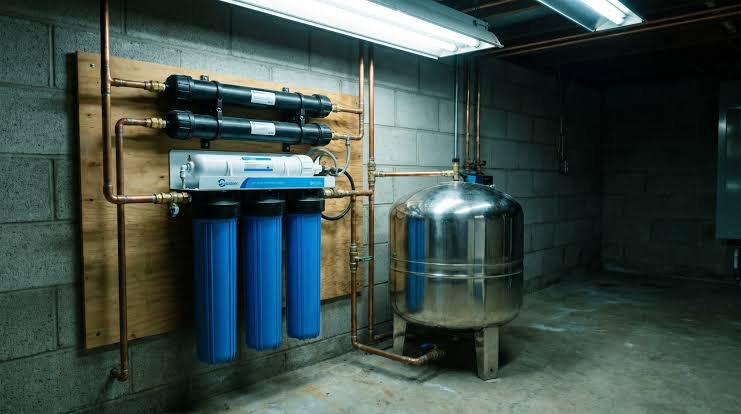
These systems are generally installed where water enters the home, allowing treatment to take place before the water travels to sinks, showers, appliances, and other fixtures. Depending on the type of filtration and the specific equipment, a whole-house setup may address concerns such as sediment, taste, odor, or other water characteristics.
The main advantage is convenience.
Instead of installing separate filters at multiple locations, treatment begins at a central point. This can make sense for households where the water concern isn’t limited to one faucet.
Related reading Why the Right Water Treatment Equipment Makes a Bigger Difference Than Most People Expect
Still, bigger isn’t automatically better.
A large treatment system may be unnecessary if your only concern is drinking water from the kitchen sink. The equipment should match the problem rather than turn your utility room into something that looks like a small science laboratory.
Better Drinking Water Can Be a More Focused Goal
For many families, the water used for showers and laundry is perfectly acceptable. The main complaint is what comes out of the kitchen faucet.
Maybe it affects the taste of coffee. Maybe the kids don’t like drinking it. Perhaps you’re tired of carrying heavy cases of bottled water from the store.
Related reading The Smart First Step Toward Better Water at Home
This is where Reverse osmosis units may be considered as a point-of-use treatment option. These systems are commonly installed near a specific drinking water location and use a membrane-based process to reduce certain dissolved substances, depending on the system and water conditions.
The important thing is understanding what the particular system is designed to address.
Not every reverse osmosis system performs the same way, and maintenance matters. Filters and membranes may require replacement according to the manufacturer’s recommendations, and household water conditions can affect overall performance.
But for homeowners focused primarily on drinking and cooking water, a targeted solution can sometimes make more practical sense than treating every gallon used throughout the home.
After all, you probably don’t need the same level of treatment for flushing a toilet that you want for filling your favorite coffee mug.
Hard Water Is a Different Kind of Problem
Hard water often announces itself through little frustrations.
The shower door develops stubborn white spots. Faucets collect chalky residue. Glasses come out of the dishwasher looking cloudy, even though they were technically cleaned. Soap may not lather as easily, and laundry can sometimes feel different than expected.
These issues are generally associated with minerals in the water, commonly calcium and magnesium.
In homes where hardness is the main concern, Water softeners are designed specifically to address hardness-causing minerals through processes such as ion exchange, depending on the system.
This is different from ordinary filtration.
A standard sediment filter, for example, may capture particles but isn’t necessarily designed to reduce dissolved hardness minerals. That’s why understanding the actual issue is so important before selecting equipment.
When properly matched to the home’s needs, a softening system may help reduce mineral-related buildup and improve the overall experience of using water throughout the house.
Sometimes One System Isn’t Enough
Here’s where things get interesting.
Some households have more than one water concern.
A home may have hard water throughout the property while the family also wants improved drinking water at the kitchen sink. In that situation, a whole-home softening system and a separate drinking water treatment system may work together rather than competing with each other.
Another property may require sediment filtration before other treatment equipment can perform as intended.
This is why there isn’t a universal “best water system.”
The right setup depends on the incoming water and what you want to accomplish. One home may need a single targeted solution. Another may benefit from multiple stages of treatment.
The goal is not to collect as many tanks and filters as possible.
It’s to create a setup that solves real problems without adding unnecessary cost or complexity.
Consider How Your Household Uses Water
Before choosing any system, think about an ordinary day in your home.
How many people live there? How many bathrooms are regularly used? Does everyone shower in the morning? How often does the washing machine run? Do you frequently have guests?
A family with several children may have dramatically different water demands from a couple living in a smaller house.
Available installation space matters too. Some homes have large basements or utility rooms, while others barely have enough room for existing equipment.
These practical details can influence the size, capacity, and type of system that makes sense.
It’s easy to get distracted by impressive features and technical specifications, but the best equipment is usually the equipment that fits naturally into your actual life.
A system shouldn’t require you to redesign your routine around it.
Don’t Ignore Maintenance
Water treatment equipment isn’t usually a “set it and forget it forever” purchase.
Filters may need replacement. Certain systems may require supplies, inspections, or periodic service. Reverse osmosis membranes and prefilters have maintenance schedules, while softening systems may require ongoing attention depending on their design.
Before making a decision, ask practical questions.
How often will maintenance be needed? What replacement parts or supplies are required? Are they easy to obtain? Can routine service be handled by the homeowner, or is professional assistance recommended?
These questions might not be exciting, but they become important long after installation day.
A simpler system that you can maintain properly may ultimately provide a better experience than an overly complicated one with features you never use.
Choosing the Right Combination for Your Home
There’s no prize for having the most advanced water treatment setup on the block.
What matters is whether the system solves your actual problem.
If sediment, taste, or odor affects water throughout the home, whole-home filtration may be worth exploring. If your main concern is the quality of water used for drinking and cooking, a point-of-use system such as reverse osmosis could be a more focused option. If mineral hardness is creating buildup and affecting household routines, a water softener may be the more appropriate solution.
Sometimes these systems can complement each other.
The best decision usually begins with good information rather than a product brochure. Understand your water, consider your household’s daily needs, and think about long-term maintenance before committing to equipment.
Better Water Should Make Life Feel Easier
At the end of the day, most homeowners don’t research filtration systems because they enjoy reading about membranes, tanks, minerals, and plumbing connections.
They want everyday life to feel easier.
They want cleaner-looking fixtures, better-tasting water, fewer frustrating spots on dishes, and a treatment solution that quietly does its job without demanding constant attention.
The right approach is usually less about choosing the most expensive technology and more about matching the technology to the problem.
Understand what is in your water. Identify what you want to improve. Consider how your household actually uses water every day.
Then choose the solution—or combination of solutions—that makes sense for your home.
When the system is properly matched to your needs, it should eventually become something you barely think about. You turn on the faucet, fill a glass, take a shower, run the dishwasher, and move on with your day.